
As the program coordinator of the Abolition Lab, I have the fantastic job of getting to see and reflect upon the innovative work of my colleagues in the lab. In the first year of the lab, I learned a lot about abolition in historical perspective. I share some of the things that I learned and connections that I made in this post.
Many of the people who first settled in Galesburg and who were early members of the college community were abolitionists. Some of them, including Jonathan Blanchard, may even warrant the title of “radical Abolitionist.” During the last year, I have learned a lot about different sorts of historical opposition to slavery in the United States, from those who were only generally against the idea of slavery to those who believed that American slavery should be phased out slowly to those who were actively involved in dismantling the system of slavery as soon as possible. I also learned a great deal about the racism that pervaded the abolitionist movement in the United States in the nineteenth century and the role that African-Americans undertook to end slavery.
Learning more about the details of the abolition of the U.S.’s system of slavery caused me to reflect on my own area of historical expertise and the lack of engagement with the issue of abolition in discussions of ancient slavery. The last year has provided new perspectives with which I might investigate the inequities rife within the Roman empire. Year One’s explorations of nineteenth century American abolitionism made me wonder about abolitionism in the ancient world. Slavery was a common and accepted part of ancient life, yet the treatment that slavery receives in ancient history textbooks is very different from the treatment that the subject receives in American history textbooks. No doubt, this can at least be traced in part to the source material – the enslavers of the ancient world wrote most of the texts that survive so they spend little time considering the abolition of the system that supported their economic interests, especially since there was no active abolitionist movement that prompted them to consider the abolition of slavery.
Ancient authors may not have been particularly bothered by slavery, but they were concerned with poverty. Again, they would not have used the language of abolition, but in their concern about freedom from want and the care of widows and orphans, we can read a concern for the poor. For me, as an ancient historian, the place where ideas about abolition resonate most strongly with my own work is in relation to the abolition of poverty.
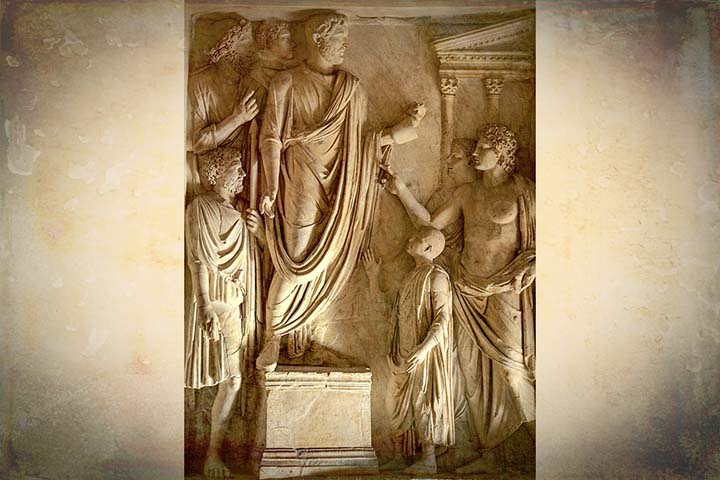
Ancient efforts to eliminate poverty looked nothing like the Great Society programs of Lyndon Johnson. Rather, we see its reflection in imperial acts and religious texts. Before Rome had an emperor, the citizens of the city had the idea that all Romans deserved to be able to buy grain and oil – the staff of life – at reasonable prices. The tribune Gaius Gracchus set up a system to distribute grain as early as 123 BCE. Over time, this system of charitable supports grew, and eventually emperors were expected to insure not only access to grain for the residents of Rome (annona), but also financial support for the children of Italy (alimenta), as well as bonuses for the empire’s soldiers (donatives).
Jewish and Christian texts also help us understand the shape of poverty in antiquity, as well as the mechanisms through which people tried to eliminate poverty, or at least want. Members of the early Christian community pooled their belongings and wealth in order to support themselves.
“The community of believers was of one heart and mind, and no one claimed that any of his possessions was his own, but they had everything in common. With great power the apostles bore witness to the resurrection of the Lord Jesus, and great favor was accorded them all. There was no needy person among them, for those who owned property of houses would sell them, bring the proceeds of the sale, and put them at the feet of the apostles, and they were distributed to each according to need.”
Acts 4: 32-35
The importance of sharing worldly belongings and wealth is emphasized repeatedly throughout the New Testament and other early Christian texts.
Early rabbis share a similar preoccupation with the poor but advocated support of the poor through a distribution system managed by each local community – specifically, through soup kitchens (tamhui) and charity funds (quppa). These organs of the community were managed by a person within the community given the mission of maintaining the dignity of the poor. The person’s main job was to make sure that the poor were not reduced to public begging, which would destroy their dignity. The roots of our attempts to abolish poverty run deep.
